The Jury
Three specialists to a Prize, twelve across the season. Every juror is named, with their instrument and where they work, before applications open — never after.
Piano Prize
-
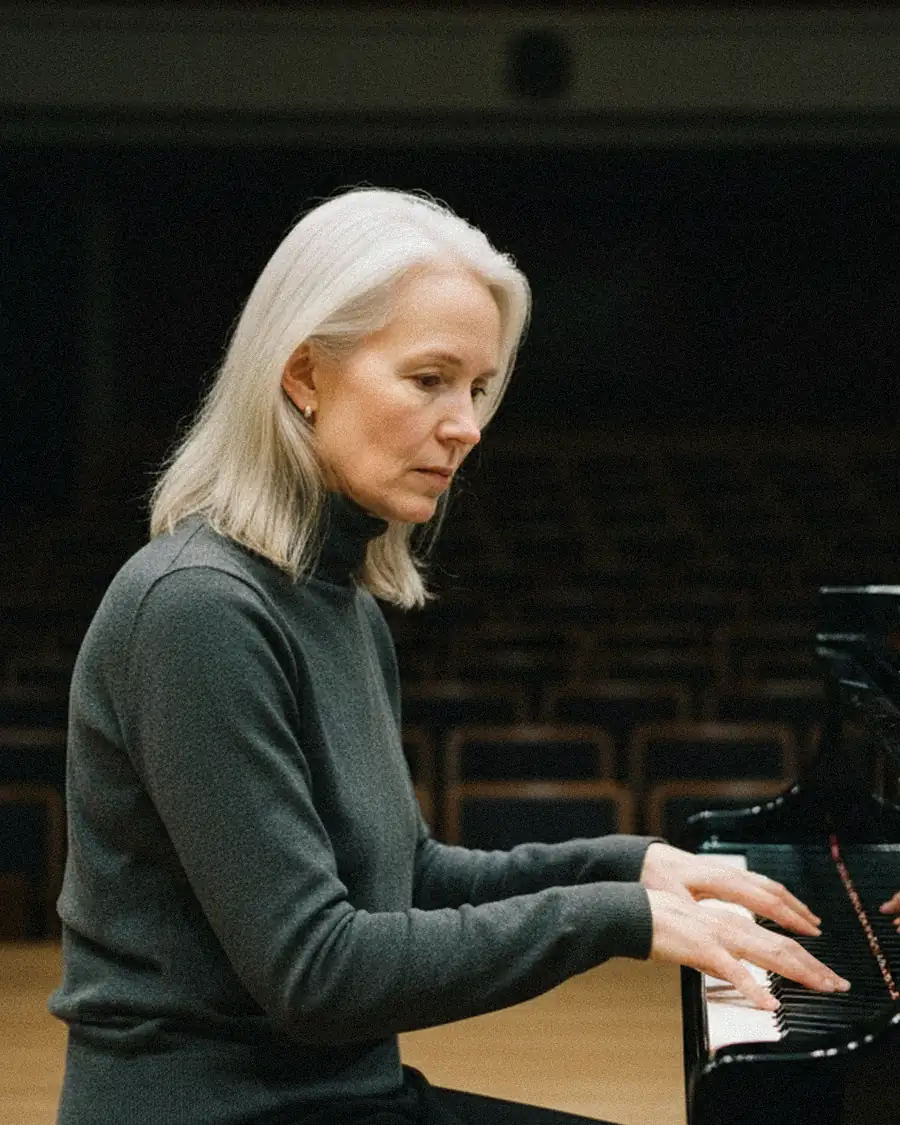
Sigrún Ólafsdóttir
She grew up in Akureyri, four hundred kilometres and one piano teacher from Reykjavík, and for four years her childhood was measured in bus timetables: south twice a month, two lessons, a night on a relative's sofa, home before school on Monday. London came next, a scholarship and a decade of the things a Nordic pianist is supposed to want. Then, in her mid-thirties, her right hand began to fail her — a tendon that would not forgive — and she lost two years and most of her nerve. What came back on the other side of that silence was slower and stranger and entirely her own. She is known now for two things the same pianist rarely owns at once: a complete Grieg Lyric Pieces that a critic called "the first recording since Gilels with anything new to say," and a long project commissioning Icelandic composers to answer, in short pieces, the landscape she grew up inside. She teaches in Reykjavík and still refuses to fly to any engagement she can reach by sea. The sea, she says, is the only audience that never applauds and is never wrong.
-
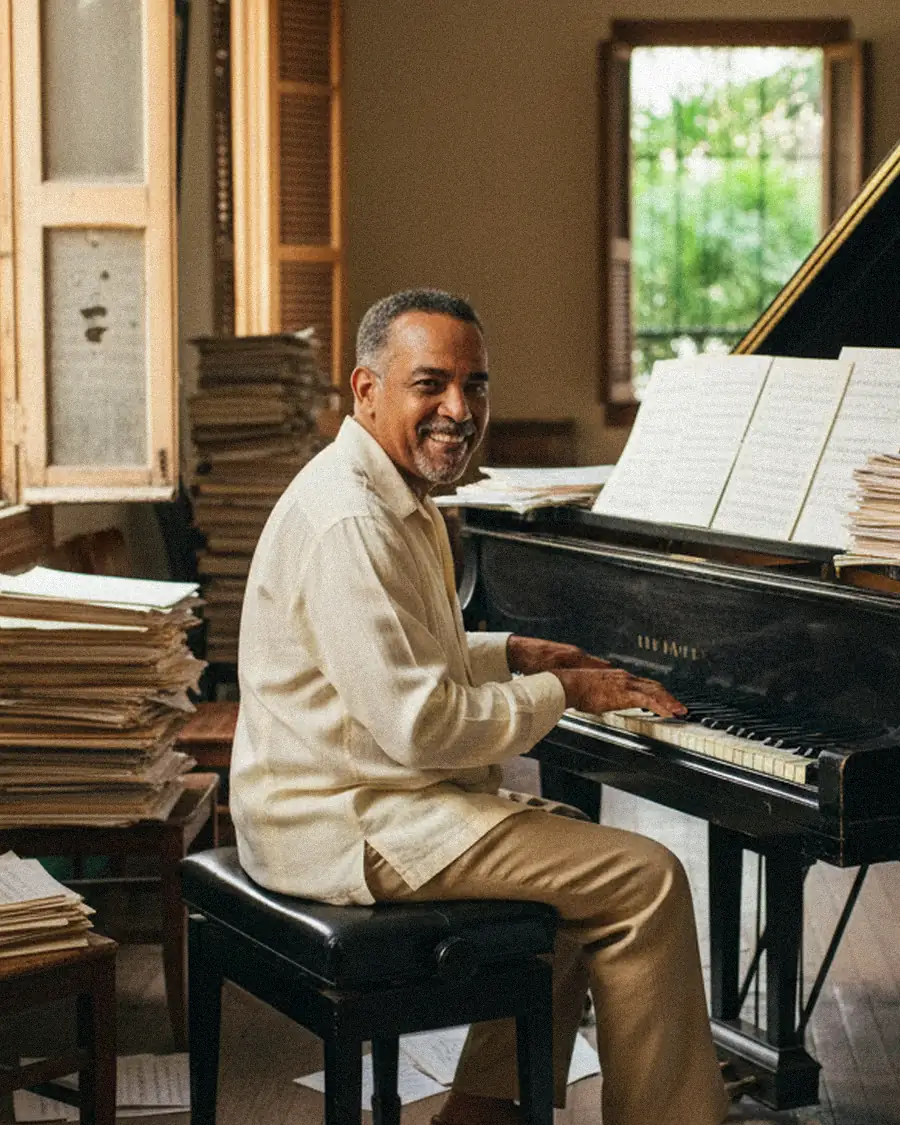
Leonardo Valdés
Havana taught him the piano with a Russian weight of sound — his teacher had studied in Moscow and handed down a tone like a full hand on the keys — and he has spent his whole career trying to lift it, lighten it, let air into it. He left in the mid-1990s, Mexico City first, then Madrid, and made his name on repertoire most pianists of his generation never touch: the Iberian and Afro-Cuban literature, Albéniz and Granados and the living composers of a diaspora scattered across three continents. A 2011 disc of unpublished Cuban sonatas became an unlikely success in Europe, and his editions of forgotten works are now studied in conservatoires he has never set foot in. In recital there is a moment his audiences wait for: the printed programme ends, and instead of an encore he improvises, and if the hall is warm enough he gets it singing back at him. He lives in Madrid and returns to Havana every summer to teach, which is the only part of his calendar he will not move for money.
-
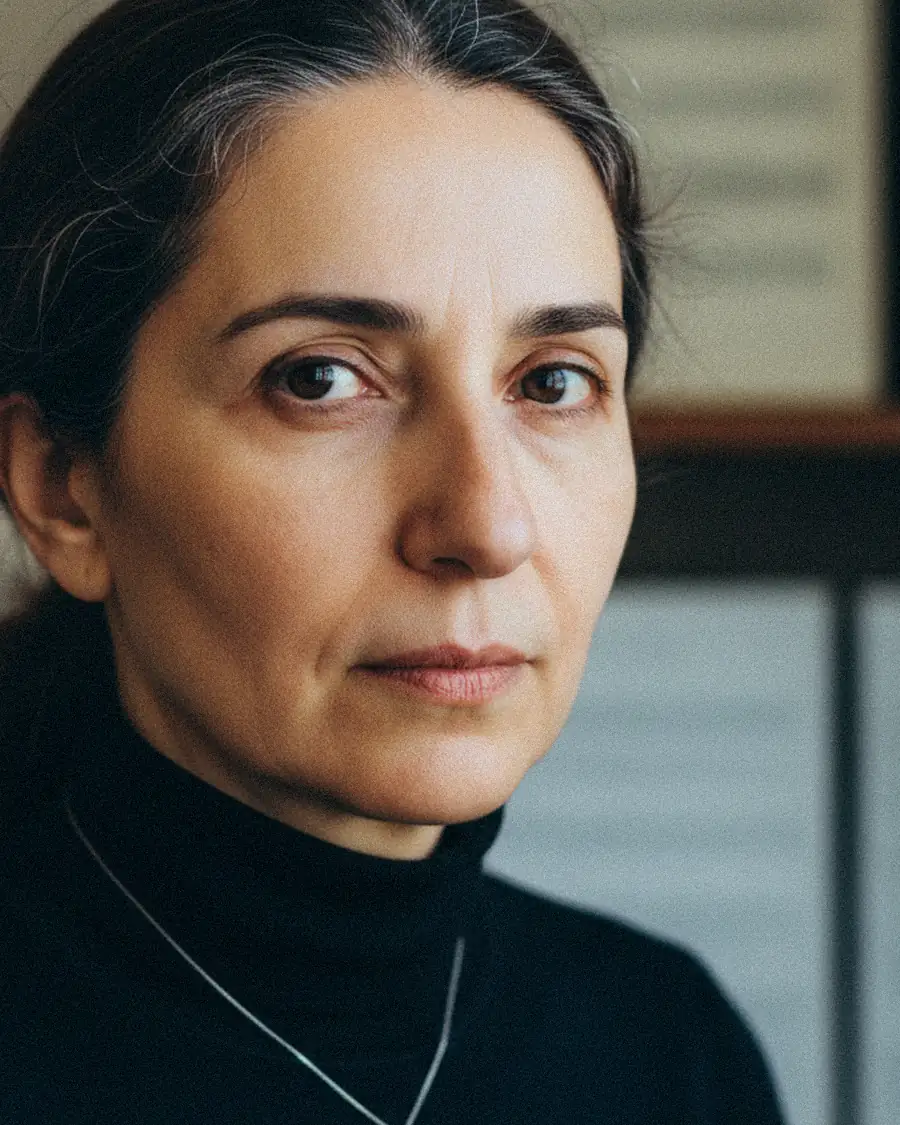
Anahit Grigoryan
She was born in Yerevan into a family that had already given two generations to the Conservatory, and studied with a teacher who could trace her line back to Neuhaus. Then the 1990s arrived and took the electricity with them: the earthquake, the blockade, the halls gone dark, two hours of power a day. She survived by accompanying singers, playing weddings, learning whole scores by candlelight — a detail she tells without a trace of drama, and which explains everything about the economy of her playing. A French promoter heard her in 1998, took her to Paris, and her career has been built in Europe ever since, largely in the service of music that is not hers by birth but which she made hers by force of attention: Khachaturian, and the Armenian composers of the early Soviet decades who were buried as "formalists." She founded a small festival in Dilijan and has recorded three discs of those rediscovered sonatas. She calls herself, only half joking, a librarian who plays the piano. The joke is that it is exactly true, and that it is the highest thing she can imagine being.
Brass Prize
-
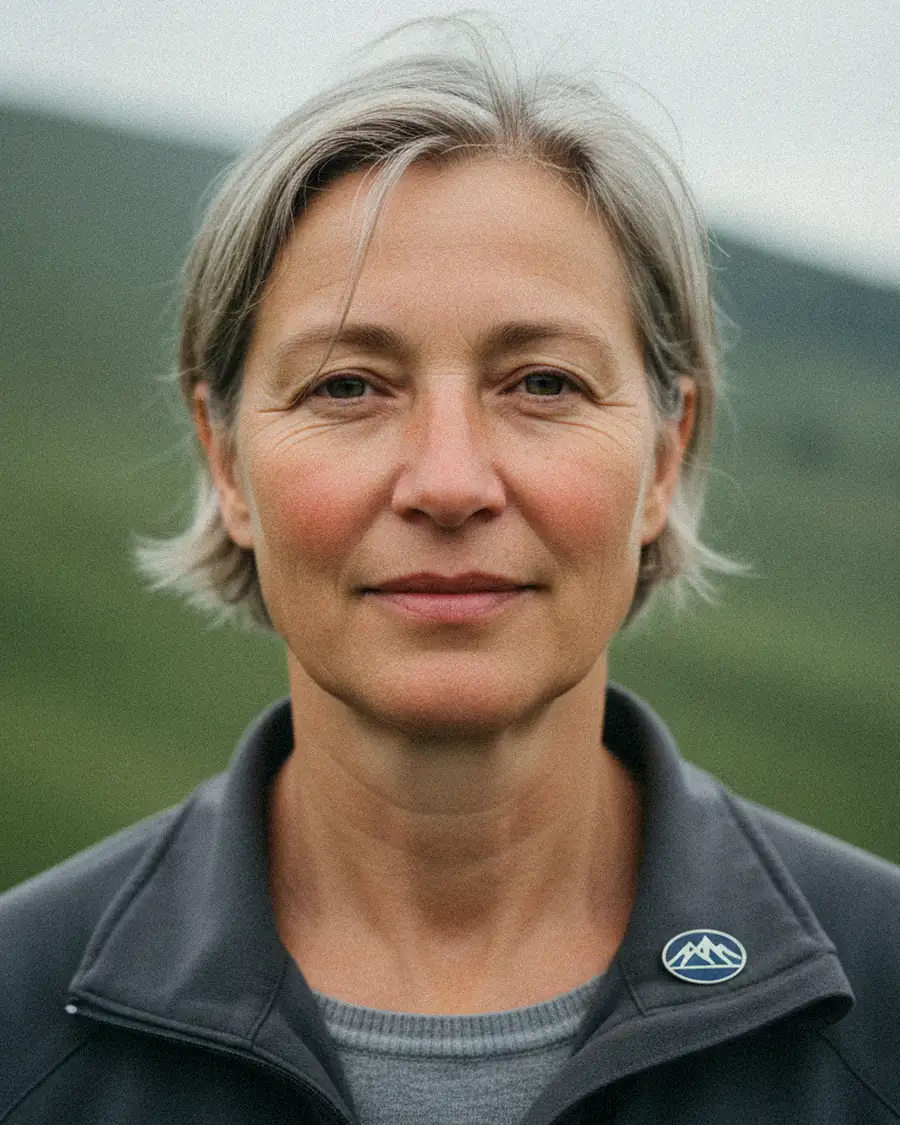
Maja Kos
She studied in Ljubljana and then in Vienna, spent nine years in a German radio orchestra, and at thirty-five made the decision that most players only talk about: she left the security of a section for the uncertainty of a solo career. It meant building a life country by country across the former Yugoslavia and the Alps — masterclasses, chamber festivals, a patient campaign to bring Slovenian horn concertos back into the air. Her recitals are strange by brass-world standards: slow music, long lines, silence. She programs the spaces between the notes as carefully as the notes. Other horn players call her when a passage will not sit, and her teaching in Ljubljana has quietly furnished half the horn sections of the Adriatic. She keeps bees in the hills above the city and insists that the bell of a horn and the hum of a hive sit at the same pitch. Nobody who has heard both has ever argued with her.
-
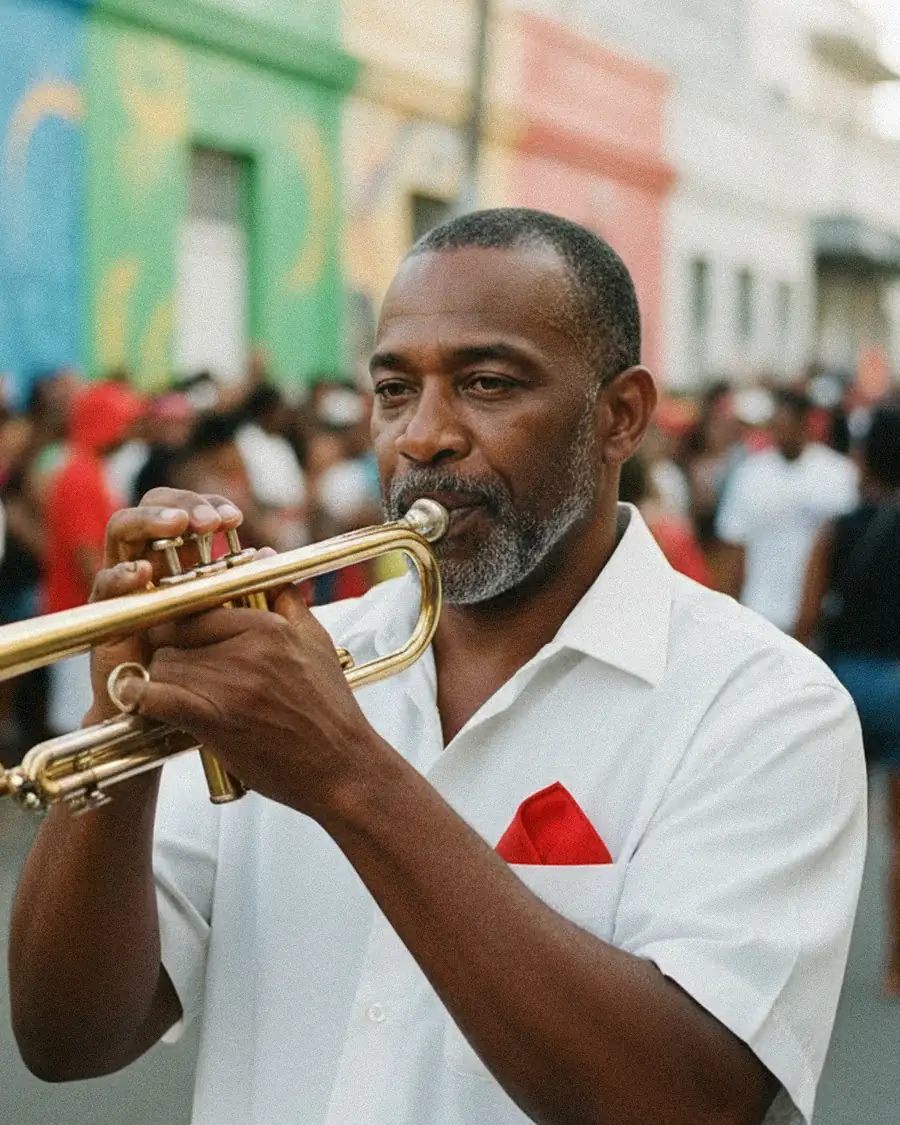
Marcus Agostini
He comes from Laventille, where the steelbands are, and he could carry a melody on a tenor pan before anyone thought to put a trumpet in his hands. A church band found him, a scholarship took him to a London conservatoire, and he has lived two lives ever since: orchestral trumpet in Britain for a decade, and every February a plane home for Carnival. In time the double life stopped being a split and became a career. He works now as a soloist and leader, setting Baroque trumpet writing against calypso and the steel orchestra, and he has carried that programme through West Africa, Brazil and half the European festival circuit. He once commissioned a concerto that asks him to play trumpet and steelpan in the same movement, and he does. He founded a brass programme in Port of Spain that has sent a dozen students to conservatoires abroad. He likes to say that the trumpet was invented in Europe but learned to dance in the Caribbean, and when he says it the room agrees.
-
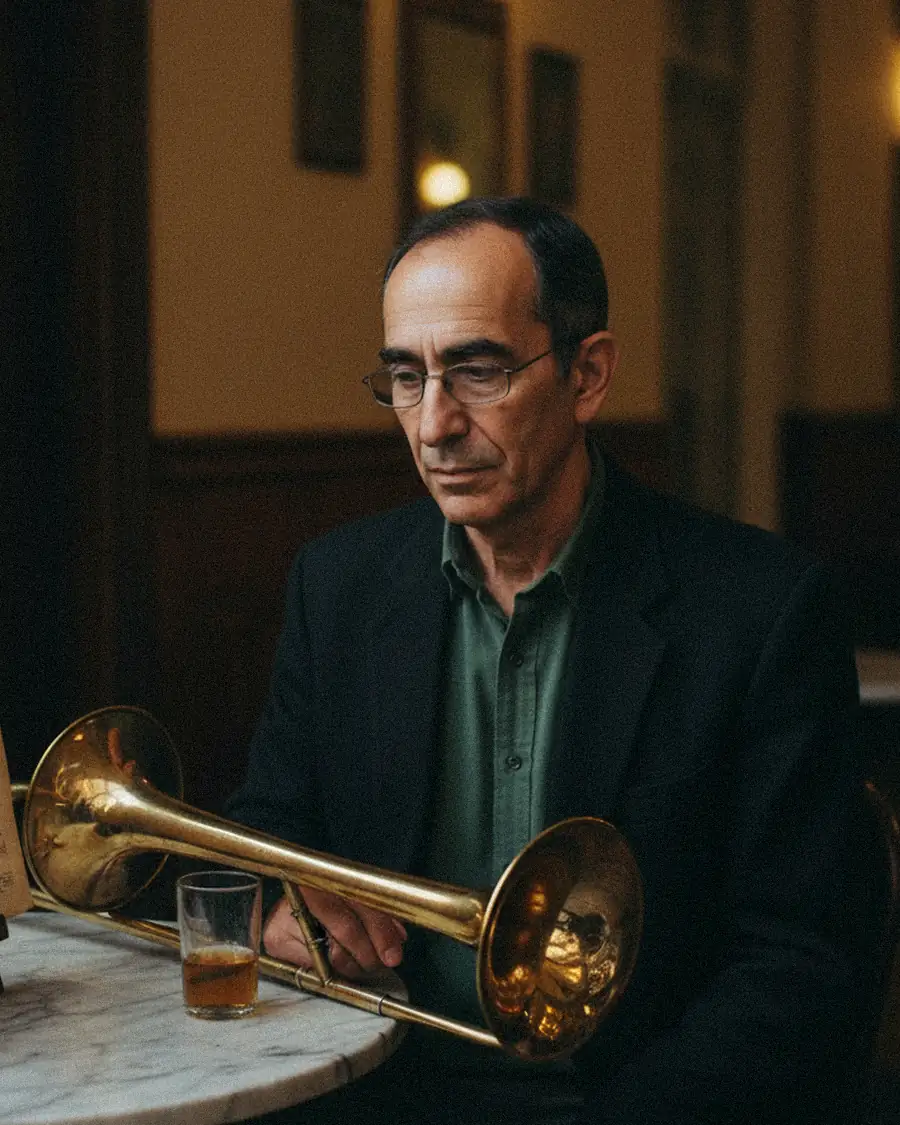
Rodrigo Fagúndez
Montevideo made him a section player and Hamburg made him something else. He won a chair in the city's philharmonic at twenty, spent a decade playing everything from Mahler to the summer tango season at the Solís, and then did the thing his teachers warned him against: he stopped trying to choose between the concert hall and the milonga. His career since has been the argument that they are the same tradition, that Piazzolla and the sonata belong in the same breath. His solo programmes fold them together, a disc of that repertoire sold far beyond the classical listeners it was made for, and he has toured Japan and Europe with a quartet that plays without scores. He came home to teach a generation of players who now do the same, and he is the juror most likely to ask an applicant why they chose a piece — and to mean it as the only question that really matters.
Woodwind Prize
-
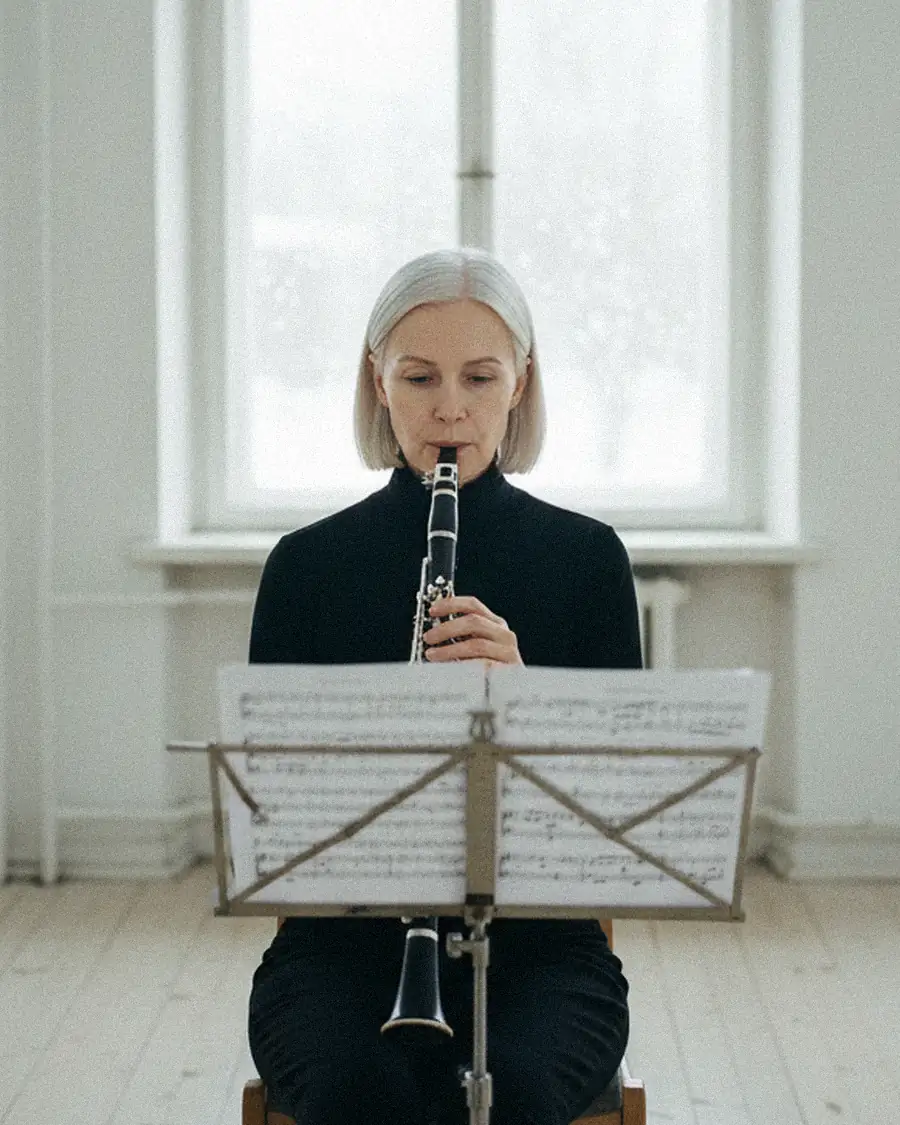
Elīna Ozoliņa
She came out of the Jāzeps Vītols Academy in Riga in the years when the borders had only just opened, and did what a whole generation of Baltic musicians did: Oslo, then Paris, then a life conducted in three languages. She is a clarinettist of the cold North. She has recorded the Nielsen and the Mozart, but it is the contemporary instrument that has claimed her — she has premiered more Latvian and Nordic clarinet works than anyone alive, many of them pieces she commissioned herself and then carried, one airport at a time, to festivals that had never put a Baltic composer on the programme. Composers write for the reedy, almost vocal quality of her sound; she thinks of the instrument as a voice with a reed and a breath, never a machine with keys. She teaches in Riga and lives mostly in Oslo, and her students know one rule: learn the words before you learn the notes. She once played an entire recital of works written after 1990 to an audience of two, and still counts it among the best concerts of her life.
-
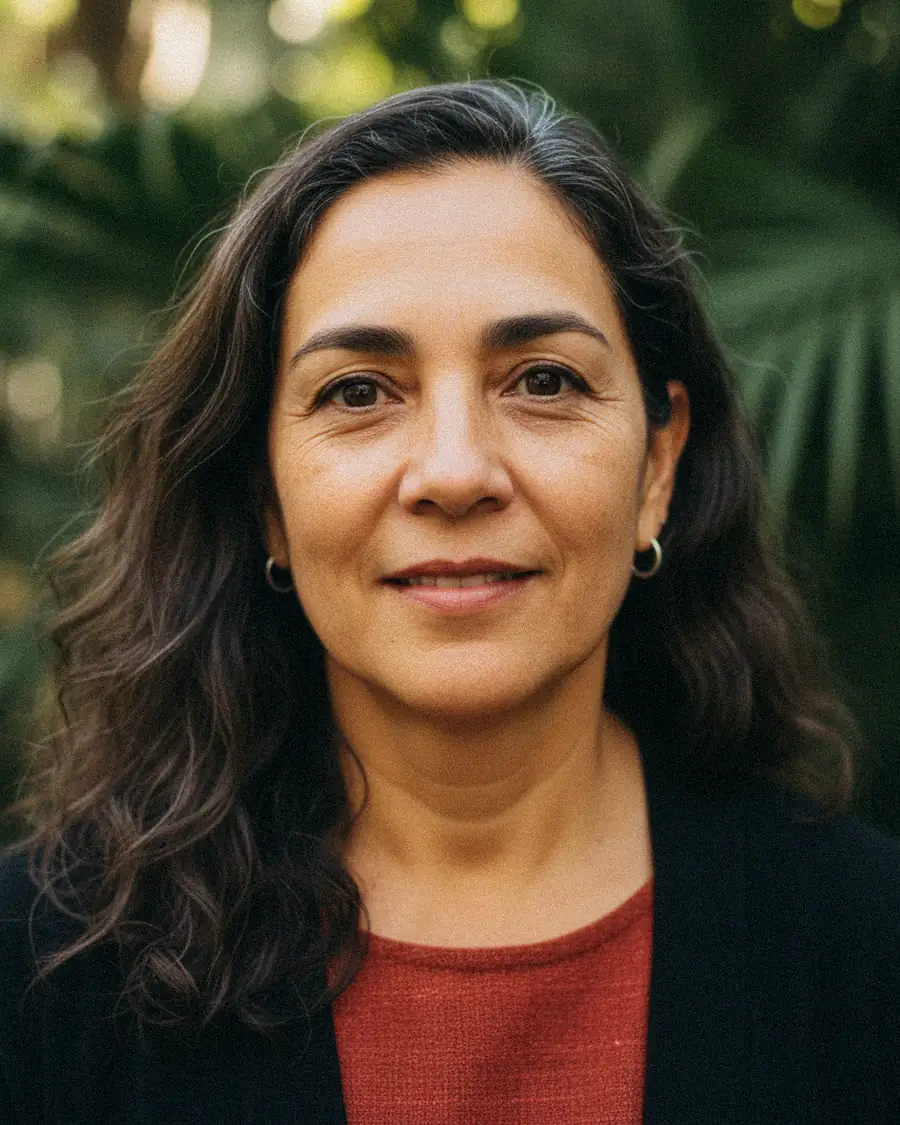
Ximena Rojas
She left San José at nineteen with a scholarship and a flute, spent ten years in Paris learning the tail end of the French school, and learned the harder lesson underneath it: that she would never be French and did not have to be. She came home in the 2000s and built a career that had not existed there before — soloist, festival director, and the stubborn voice who convinced a whole chain of regional orchestras to programme Latin American flute music instead of hiding it in an encore. Her disc of Central American works is the reference recording for a repertoire most flautists cannot even name. She founded a biennial festival in San José that has carried the instrument into schools with no music programme at all. She believes the flute's oldest repertoire is not the Baroque but the bird and the human breath, and she programmes accordingly. She still teaches in San José and turns down invitations that want her only as the lone Latin American on the poster.
-
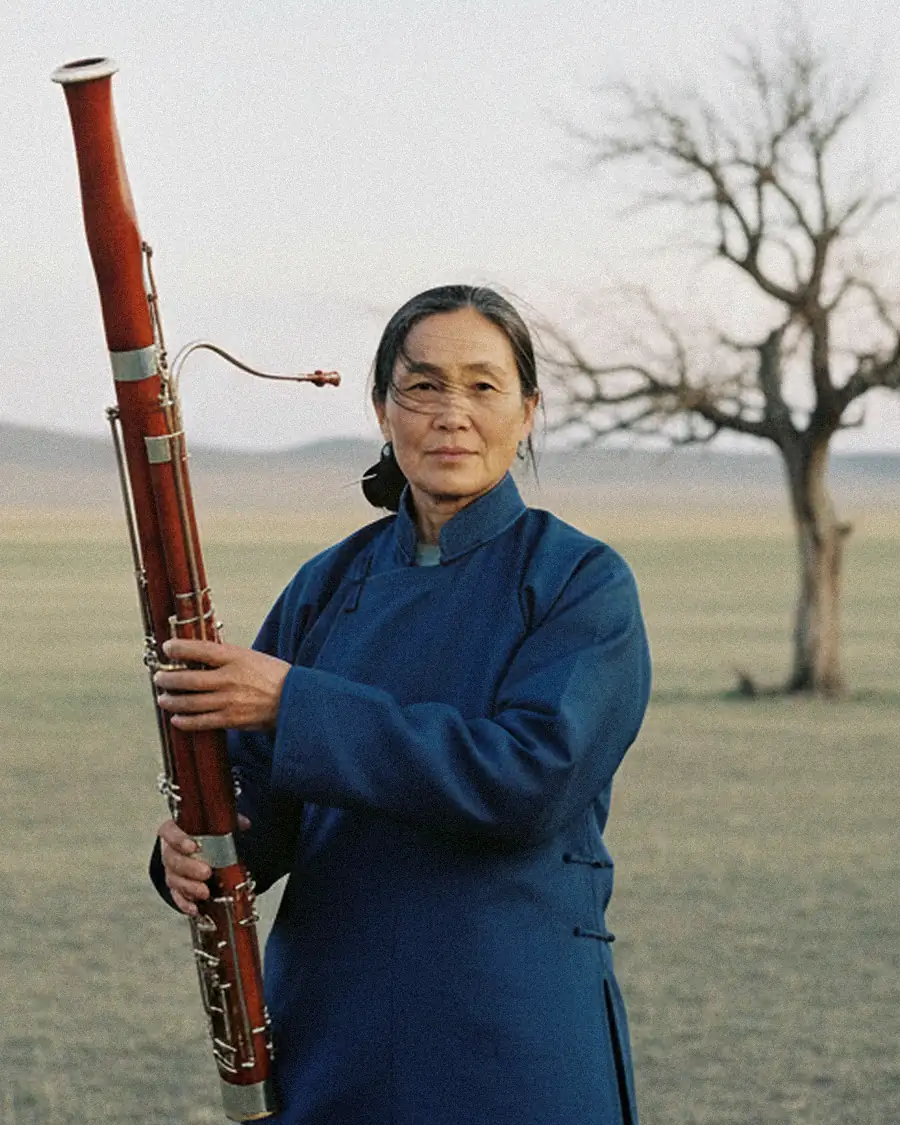
Enkhjargal Batbayar
She is the first Mongolian bassoonist to build an international solo career, a sentence that contains both the achievement and the problem: there was no repertoire, so she had to make one. Ulaanbaatar, then Moscow, then Paris, and then a decade of her thirties spent commissioning concertos that would let the bassoon speak in the idiom of the Mongolian long song — the khöömii harmonics, the enormous slow breath, the ornament that sounds like wind moving over grass. The result is a body of work that did not exist before her and that bassoonists in Europe have since taken up, having never before thought of the instrument as an Asian voice. She has played with the Mongolian Philharmonic and at festivals from Seoul to Amsterdam, and she teaches on two continents. Her favourite compliment, from an old teacher, was that she plays the bassoon the way a horse runs: from the chest, not the mouth. She has never had a better review.
String Prize
-
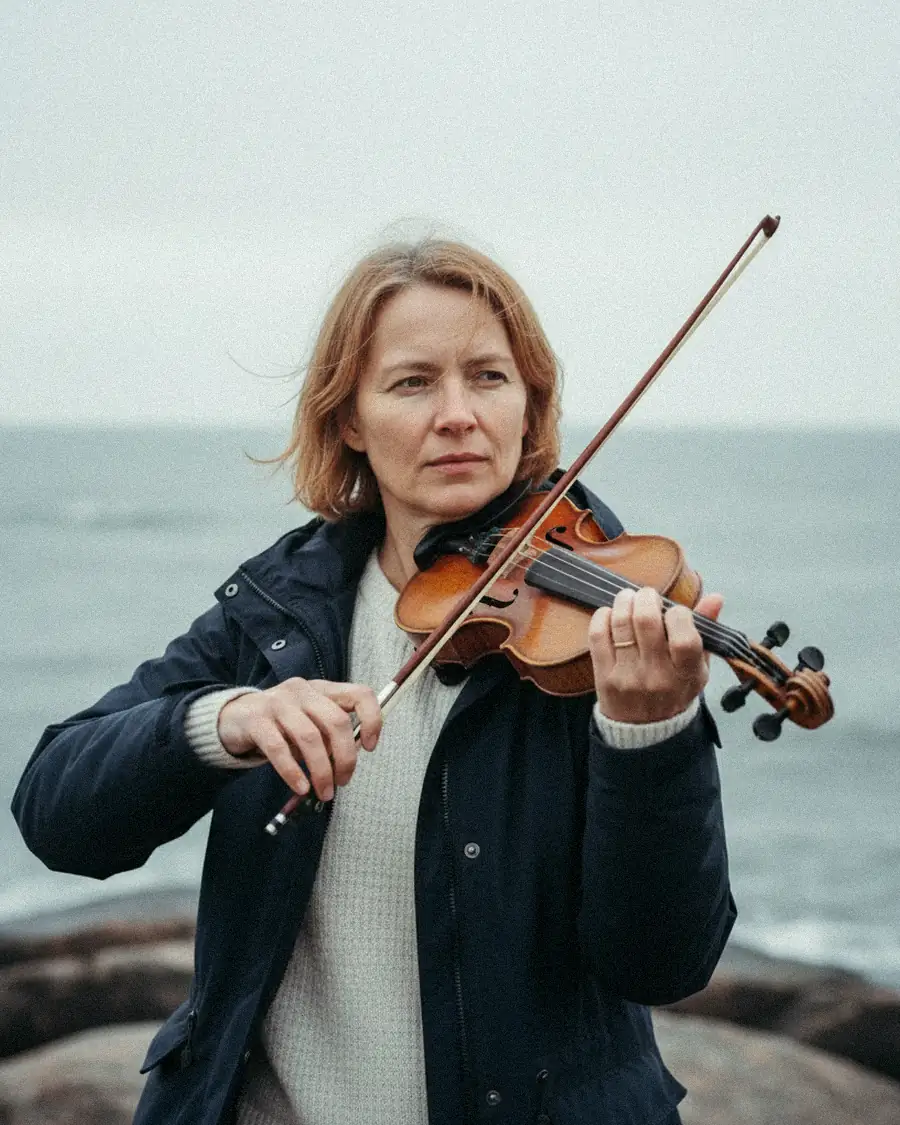
Kadri Saar
Tallinn raised her inside the Russian violin tradition at the exact moment the country was leaving it behind — her teacher had studied with a pupil of Oistrakh, and the lineage sat oddly inside a nation reinventing itself. She won her first international prize in Helsinki at twenty-two and then did the unexpected thing: she stayed. She stayed, and began to dig into the Estonian violin music that had been suppressed or simply forgotten, and the digging became a career. Her complete recording of Tubin's violin works is the reason those pieces are played outside Estonia at all; she has done the same for the early Pärt and for a shelf of manuscripts that had gone unplayed for half a century. She is a soloist across Europe and a long-serving concertmaster at home, and she teaches at the Estonian Academy, where her studio is strict about a single thing: that a student can say, in plain words, what the piece is about. She sails, and says it is the same skill — reading weather you cannot see yet.
-
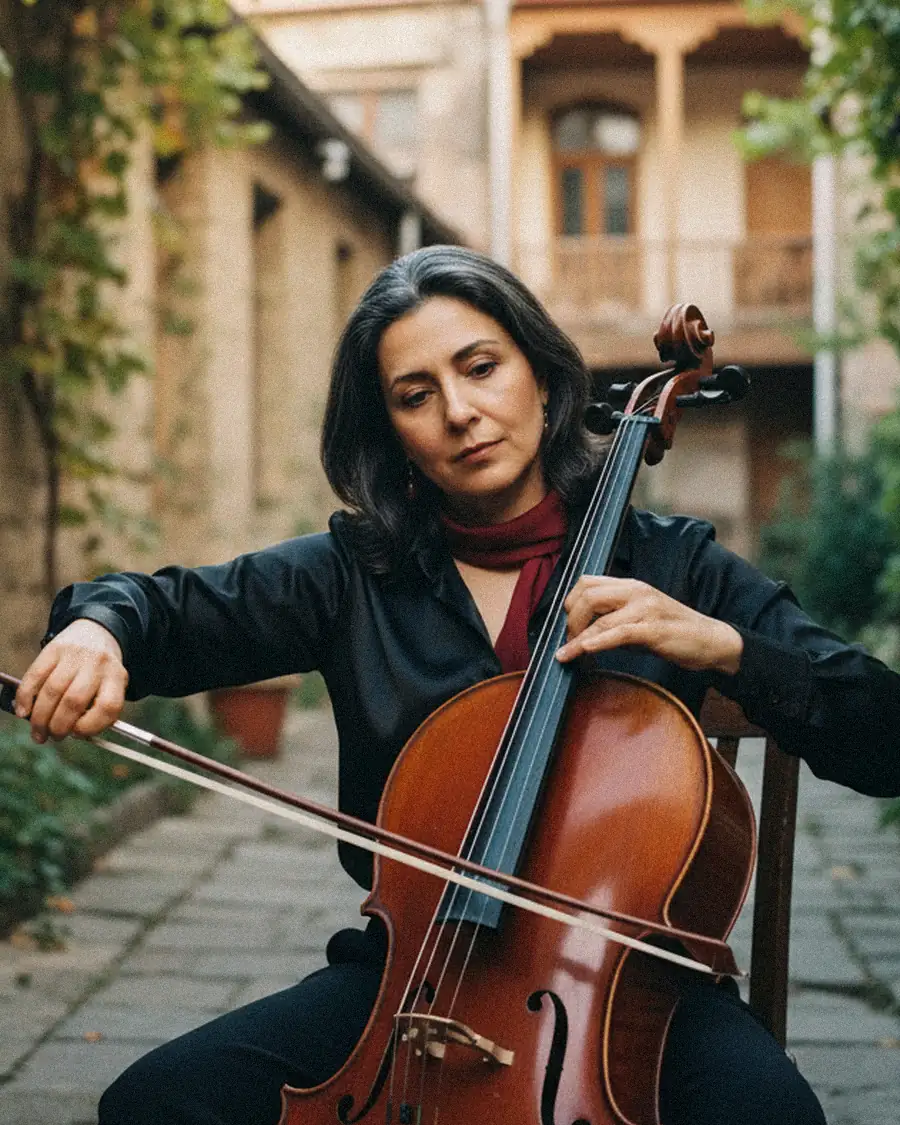
Tamar Beridze
She was born in Tbilisi to a family of engineers and a grandmother who sang, and the singing won. Beridze studied in Tbilisi and then in Moscow in the last years before the Union fell, and came out of it with a cello sound that everyone reaches for the same word to describe: vocal. For ten years she was the cellist of a piano trio that toured Europe and made three discs, and she credits those years — not the solo prizes — with teaching her to listen. Since going solo she has held to two repertoires at once: Shostakovich, and the Georgian cello sonatas of the twentieth century that she has been recovering one manuscript at a time. Her recording of those sonatas is a small act of national memory that has been heard well beyond the Caucasus. She lives in Berlin now, teaches there and in Tbilisi, and keeps a second cello strung for Georgian folk tuning. She plays it only at home, and only late, when nobody is listening.
-
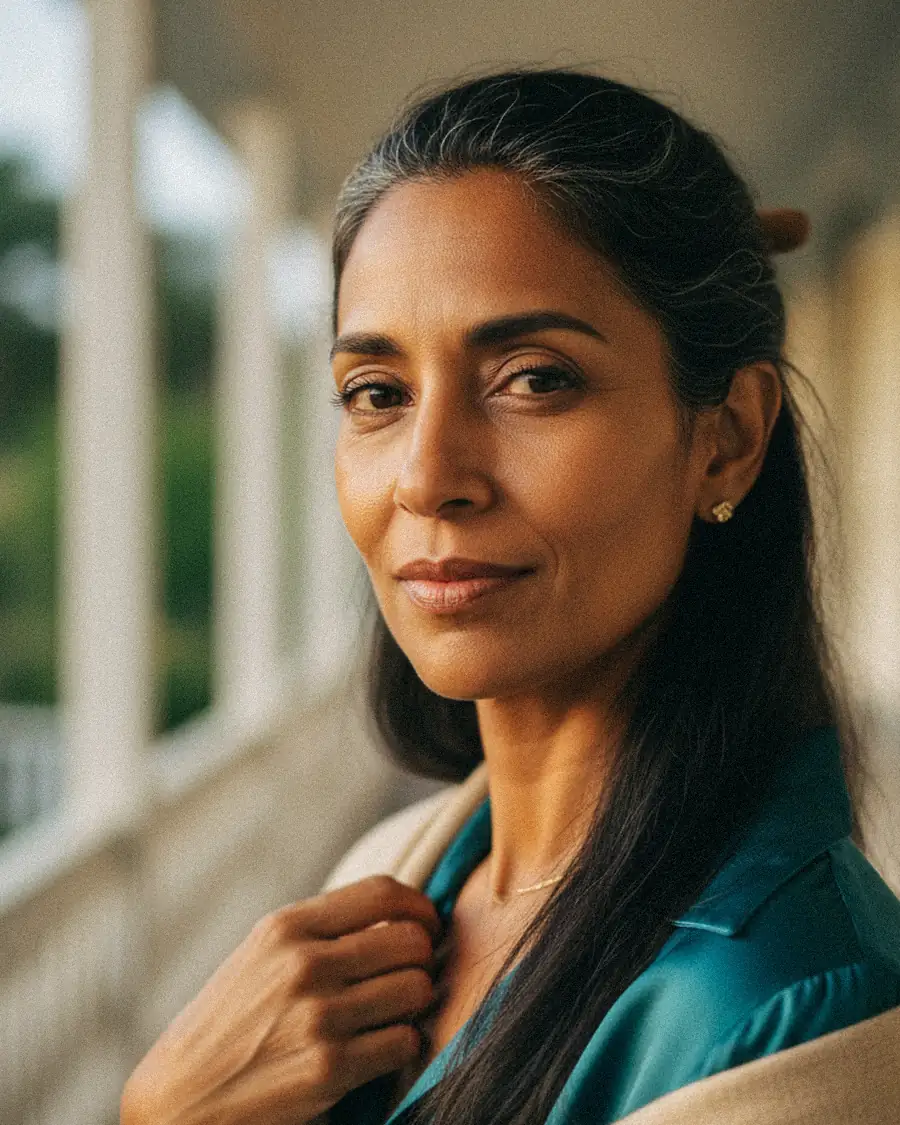
Priya Ramdhany
She grew up in Port Louis in an Indo-Mauritian household where the radio was tuned to Indian classical music and the piano in the corner belonged to the Creole songs her mother played at dusk — two traditions in the same room that never fully became one. Ramdhany took the viola to London and stayed, and built a career that has never quite fitted a template: solo recitals, new-music ensembles, and a long-running project that brings the viola into conversation with the sitar and the raga without ever pretending the two are the same thing. She has premiered composers from the Indian Ocean and South Asia, and that advocacy has made her a frequent juror and curator far from the traditional centres. She teaches in London and returns each year to run a small festival in Port Louis that she founded for the simple reason that nobody else was going to. She calls the viola "the instrument that knows how to listen" — which is also the most accurate description of her.